Projects
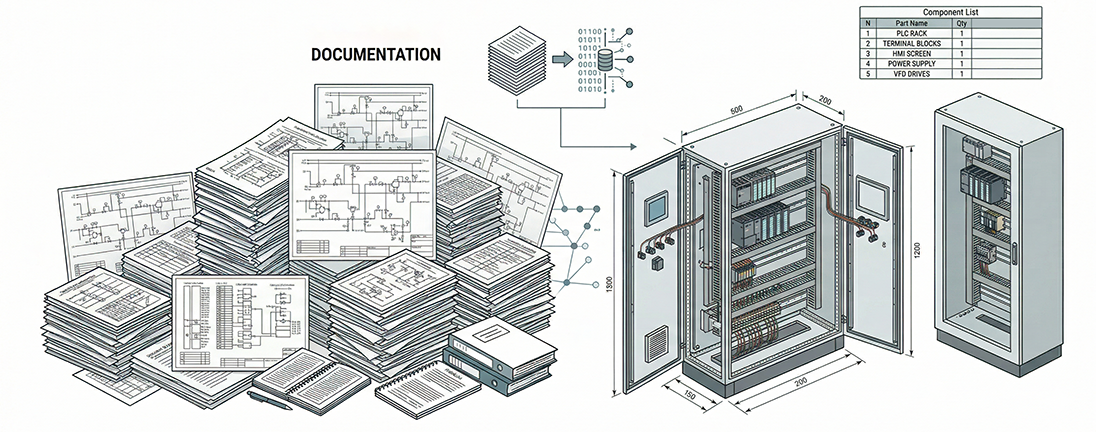
Complete Documentation for a Confectionery Production Line
Project Description
Development of the electrical part and participation in the commissioning of an industrial production line.
The project encompassed the full engineering cycle — from electrical design and equipment selection to on-site commissioning in collaboration with process engineers.
The control system was implemented based on a Siemens S7-1500 PLC with the integration of Lenze drives.
Scope of Work
- Electrical design in accordance with technical specifications
- Control system design encompassing 5 interconnected control cabinets
- Selection of electrical equipment and protection selectivity analysis
- Selection and integration of Lenze frequency inverters
- Preparation of technical specifications for PLC programming
- Development of complete documentation for the manufacturing of control cabinets
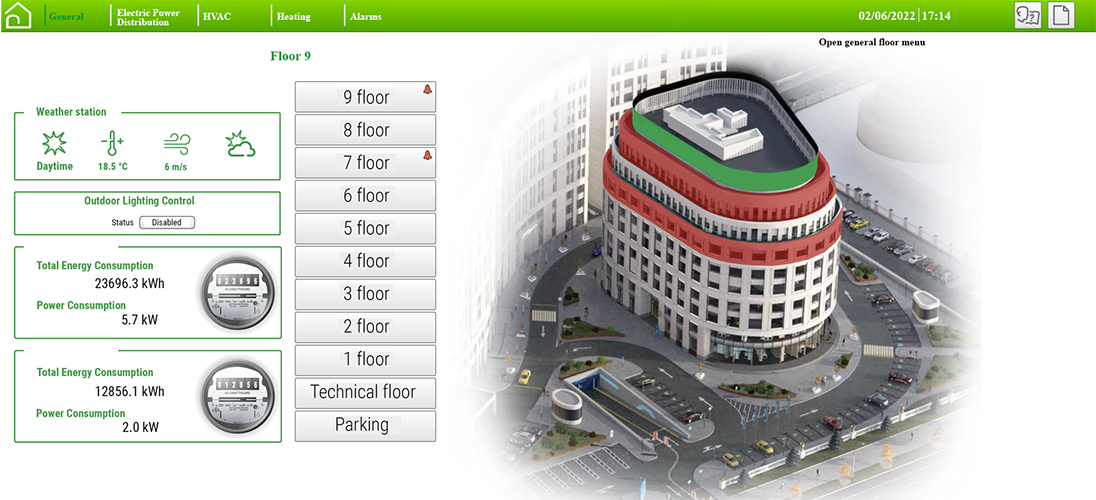
Implementation of a BMS (Building Management System)
Project Description
Design and implementation of a Building Management System (BMS) for a commercial facility, including the integration of all technical systems into a single, central control and monitoring platform.
The project included electrical design, server infrastructure development, software implementation, hardware installation, and on-site system commissioning.
Scope of Work
- Development of BMS project documentation
- Design of electrical schematics for:
- 12 BMS control cabinets
- Communication and network cabinets
- Server infrastructure design (mini data center – 12 rack cabinets)
- Selection of servers for the BMS system
- Selection of network switches for the entire building
- Programming of the supervisory system
- Programming and configuration of local systems
- Implementation of a comprehensive lighting control system
- Integration of all technical systems into a single BMS platform
- Assembly of control cabinets, device installation, hardware delivery, and on-site wiring
- System commissioning and staff training
Result
The BMS system was successfully implemented and commissioned. All technical systems were integrated into a single central platform, ensuring efficient monitoring, automation, and management of the building’s infrastructure.
Upon completion of commissioning, the system was tested, optimized, and handed over to the client along with complete documentation and staff training.
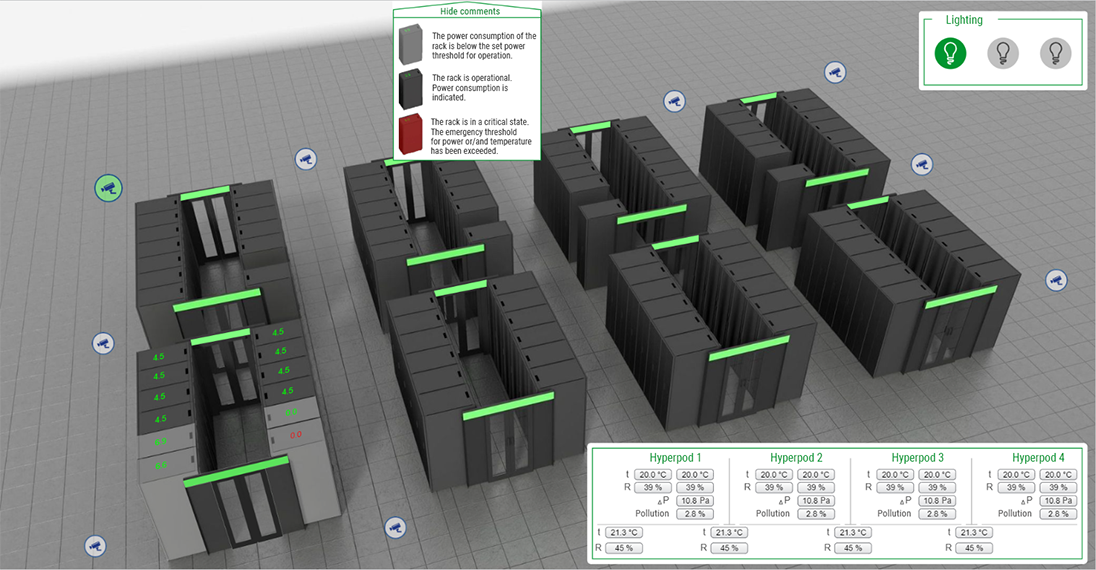
Integration of BMS with Data Center Infrastructure Automation
Scope of Work
Technical Design
- Development of BMS documentation with N+1 redundant architecture
- Design of electrical schematics for:
- 4 BMS control cabinets
- 12 ATS (Automatic Transfer Switch) cabinets for the main switchgear and cooling systems
- Communication and network cabinets
- Server infrastructure architecture design
- Power distribution system design for 72 rack cabinets
- Development of the integration architecture for all subsystems
Infrastructure Implementation
- Planning and installation of 72 server cabinets
- Implementation of the power distribution system for the data center infrastructure
- Assembly and installation of control panels
- Selection, configuration, and deployment of network switches
- Implementation of structured network infrastructure
Automation and Programming
- Configuration and programming of the supervisory BMS
- Programming of local controllers and control systems
- Integration of all technical systems into a single platform
- Configuration of data exchange between subsystems and devices
Commissioning and System Handover
- Installation and connection of the system on-site
- Functional verification of all systems
- Testing of automated scenarios
- Optimization of system parameters
- Technical staff training
- Handover of complete project documentation to the client
Project Result
The building’s technical systems and the data center infrastructure were integrated into a single, centralized monitoring and control platform.
The implemented solution provides:
- Central monitoring of technical systems
- Automated power management
- High infrastructure reliability
- Energy consumption monitoring
- Redundant and fault-tolerant server architecture The project was successfully completed, commissioned, and formally handed over to the client.
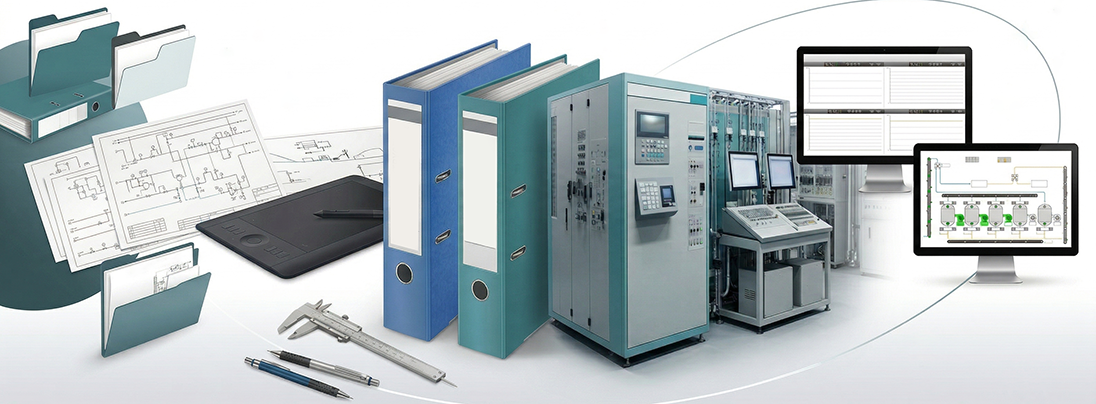
Implementation of Industrial Automation and SCADA System in a Chemical Production Plant
Project Description
Design and implementation of a comprehensive automation system for a chemical production plant specializing in silicone-based products and additives for the asphalt industry.
The solution includes a distributed control architecture based on PLCs, a redundant SCADA platform, and the integration of all production, auxiliary, and infrastructural systems into a single centralized monitoring and management platform.
The project was executed through the full cycle — from technical design and programming, through system integration, to commissioning and staff training.
System Architecture
Distributed control system based on industrial PLCs Redundant SCADA architecture (main server / standby server) Centralized data acquisition from production and auxiliary systems Integration of technological and infrastructural systems Communication protocols: Modbus TCP / RTU OPC UA Industrial Ethernet Integration of intelligent field devices Network architecture: Network segmentation into: production network, SCADA network, and IT infrastructure Network separation based on VLANs Secured using industrial firewalls PLC Programming and Process Automation Development of control logic for chemical production processes:
Automation of Mixing Systems
Automated dosing and transport of raw materials Control of pumps and valves Monitoring of temperature, pressure, and level Implementation of batch process sequences Additional functionality:
Interlock and Protection Logic
Emergency stop procedures Equipment protection against abnormal operating conditions Monitoring of technological parameter deviations Integration of weighing systems and precision dosing systems to ensure recipe accuracy and process stability.
SCADA System Implementation
Design and implementation of the central SCADA platform Development of the Human-Machine Interface (HMI) Real-time visualization of: Production lines Reactors and mixers Storage tanks Auxiliary systems Power supply systems
Implemented Features:
Alarm management with prioritization Event logging and diagnostics Archiving of historical data Recording of technological parameters Production batch reporting
Redundancy and Cybersecurity
Redundant SCADA server architecture (main / standby) Automatic failover in case of a breakdown Configuration and database backups Server infrastructure virtualization
Cybersecurity Measures:
Implementation of an industrial firewall Network segmentation Role-Based Access Control (RBAC) Authentication and permissions management
System Integration
Integration of production equipment with the central control platform Real-time data synchronization between PLC and SCADA System performance validation Communication reliability testing Optimization of operational efficiency
Commissioning and Handover
On-site installation and system commissioning Verification of technological control sequences Testing of emergency and safety scenarios Validation of interlocks and protection systems Parameter optimization Technical staff training Handover of complete project documentation
Project Result
The plant was equipped with a fully integrated and redundant automation system ensuring:
Centralized, real-time production monitoring High dosing accuracy and recipe repeatability Elevated level of industrial safety Energy consumption control Stable and reliable operation of the production infrastructure The project was successfully completed, commissioned, and formally handed over to the client.