BMS Systems in 2026: From Simple On/Off to Autonomous Energy Systems
- John Doe
- BuildingManagementSystem , SmartBuilding
- 21 Dec, 2025
Major challenge for the client:
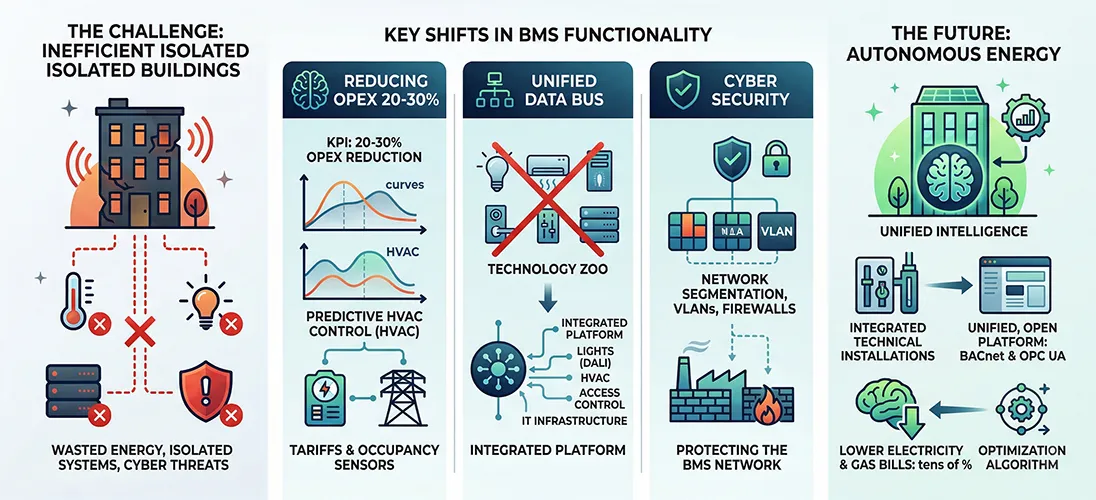
Buildings consume colossal amounts of energy, and legacy supervisory systems operate in isolation. The ventilation “does not know” that windows are open, and heating runs at 100% in empty conference rooms. On top of this, there are cybersecurity threats.
- Energy efficiency as the primary KPI: In 2026, a BMS is not purchased for pretty charts on a monitor, but to reduce OPEX (operating expenses) by 20-30%. The system must predictively control the climate (HVAC) based on energy tariffs and occupancy sensors.
- Eliminating the “technological zoo”: Transitioning from distributed protocols to a unified data bus. A modern BMS seamlessly integrates lighting (e.g., DALI), HVAC, Access Control (AC) systems, and IT infrastructure (Data Centers) into a single platform.
- Building infrastructure cybersecurity: The BMS can no longer be a security hole in the internal network. Implementing strict network segmentation, VLANs, and industrial firewalls to protect the building against hacker attacks.
Implement a unified, open management platform (e.g., based on BACnet or OPC UA) that integrates all technical installations within a single interface. This provides centralized control, blocks hackers through a secure IT architecture, and automatically reduces electricity and gas bills by tens of percent using optimization algorithms.